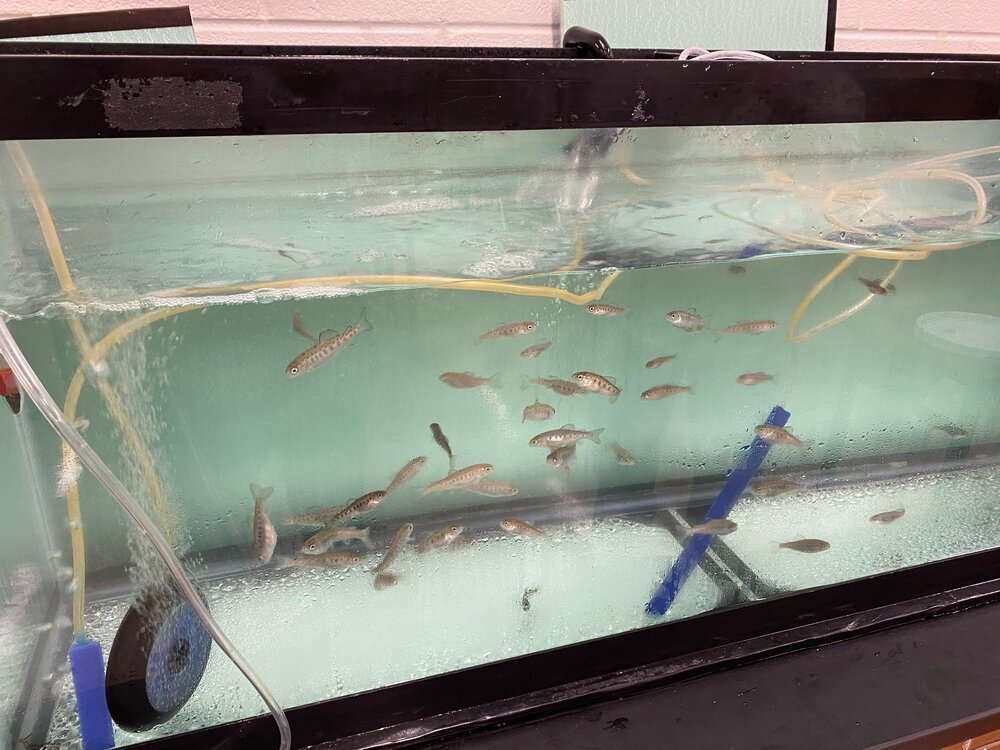
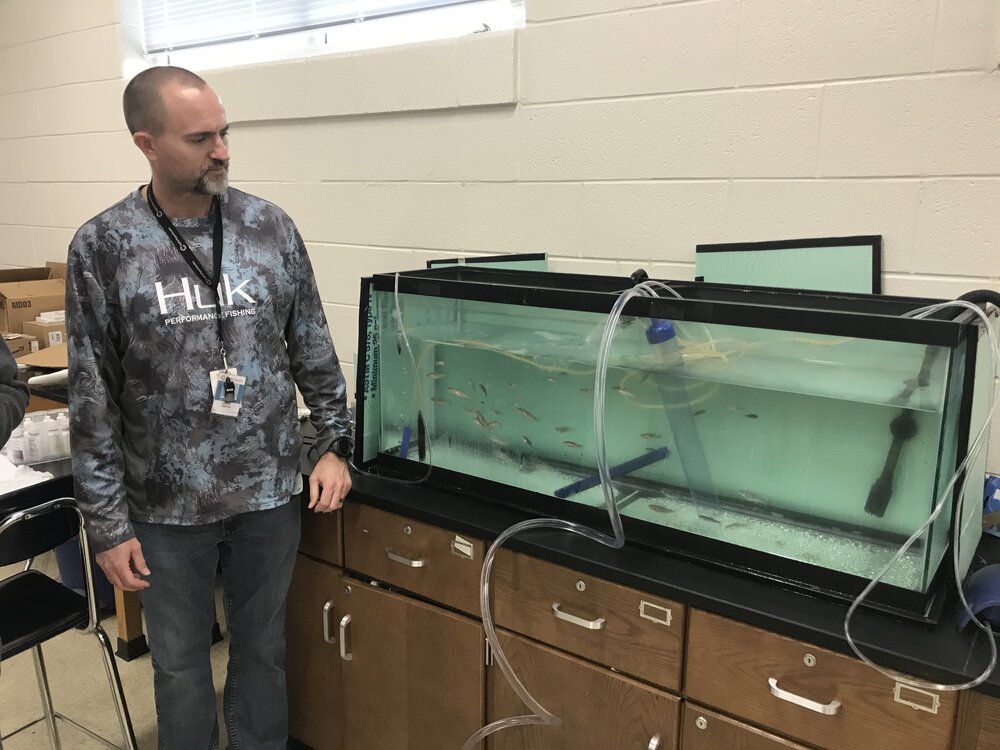
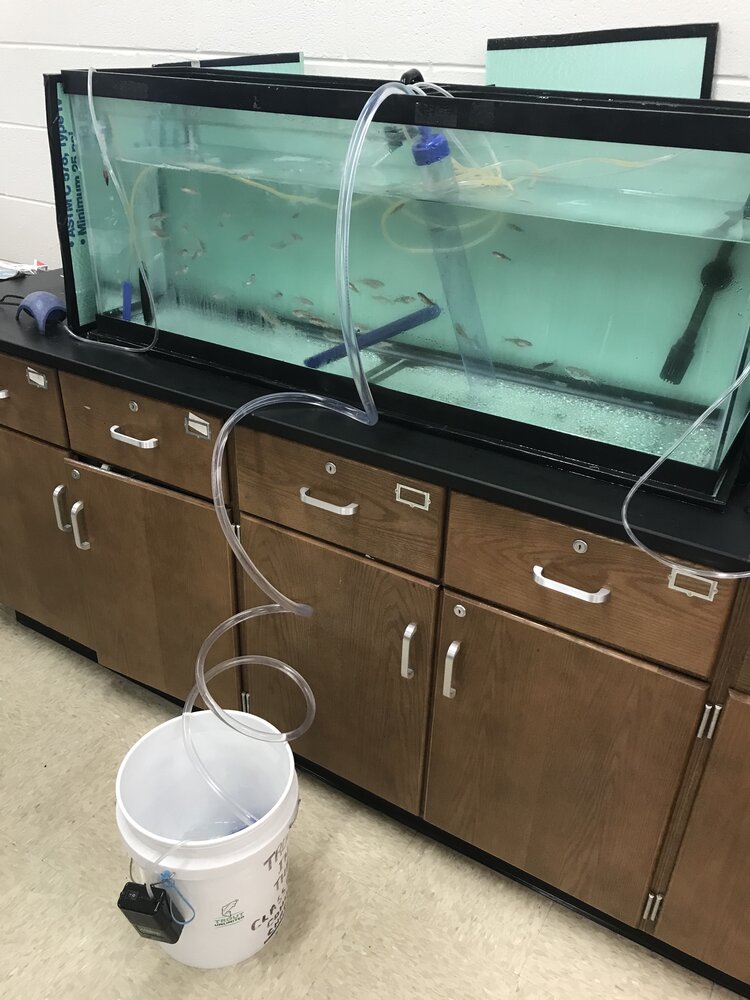
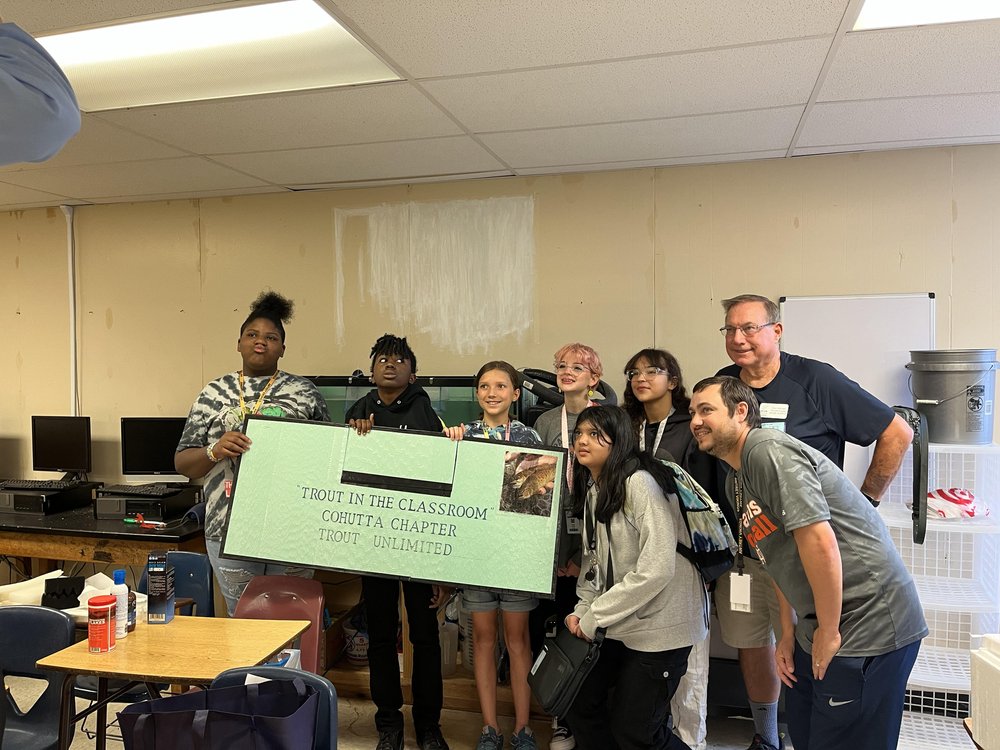
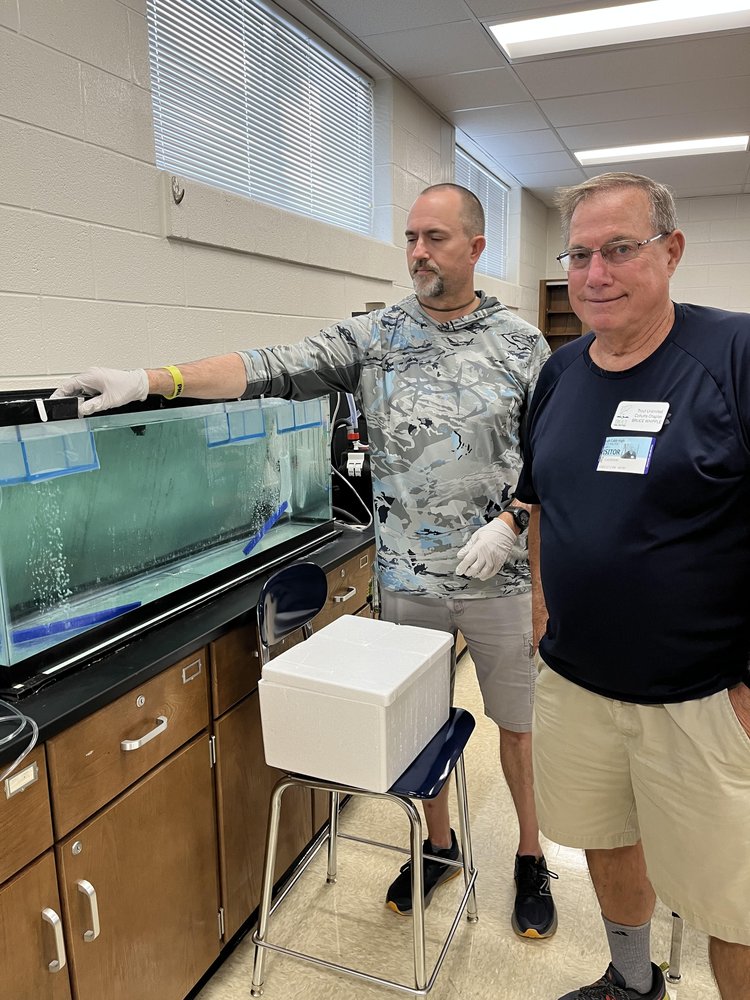
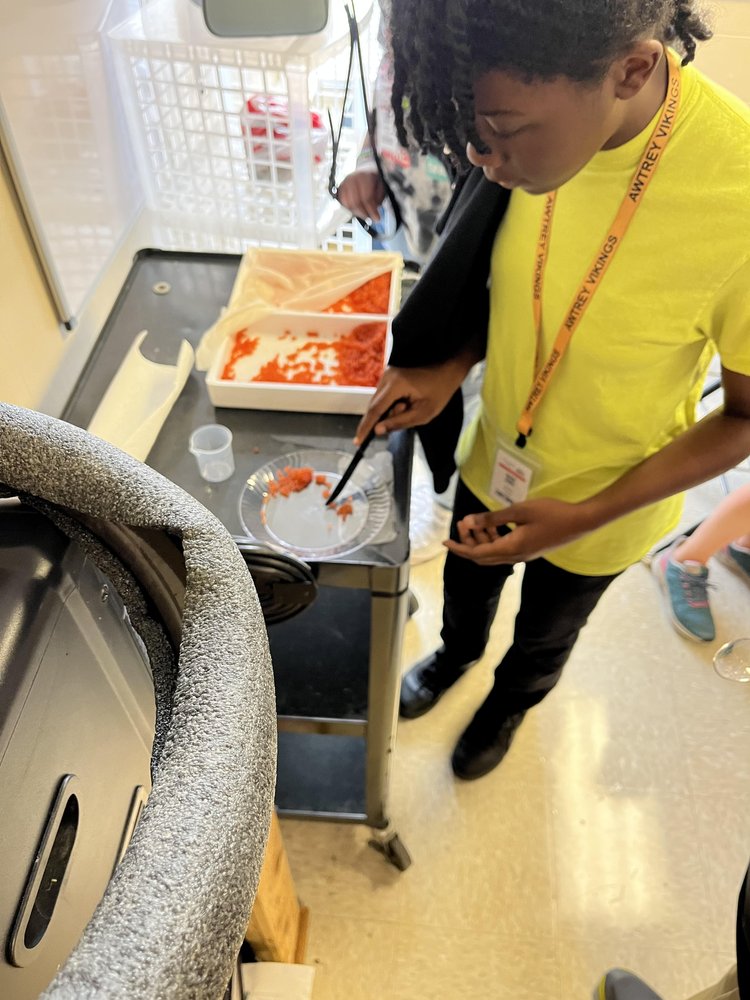
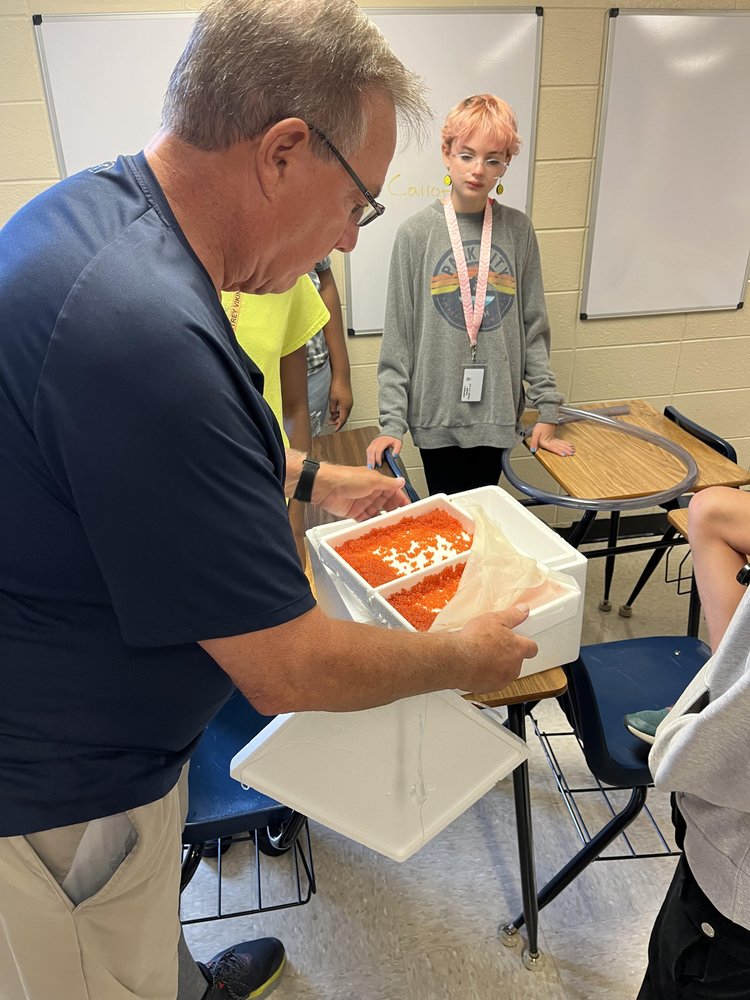
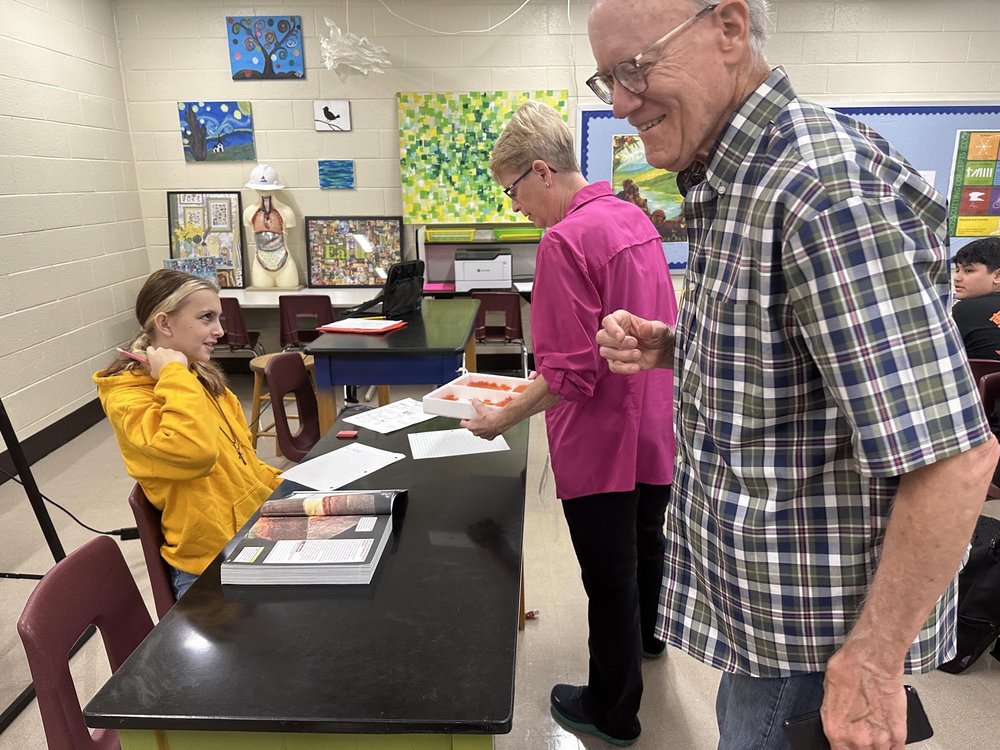
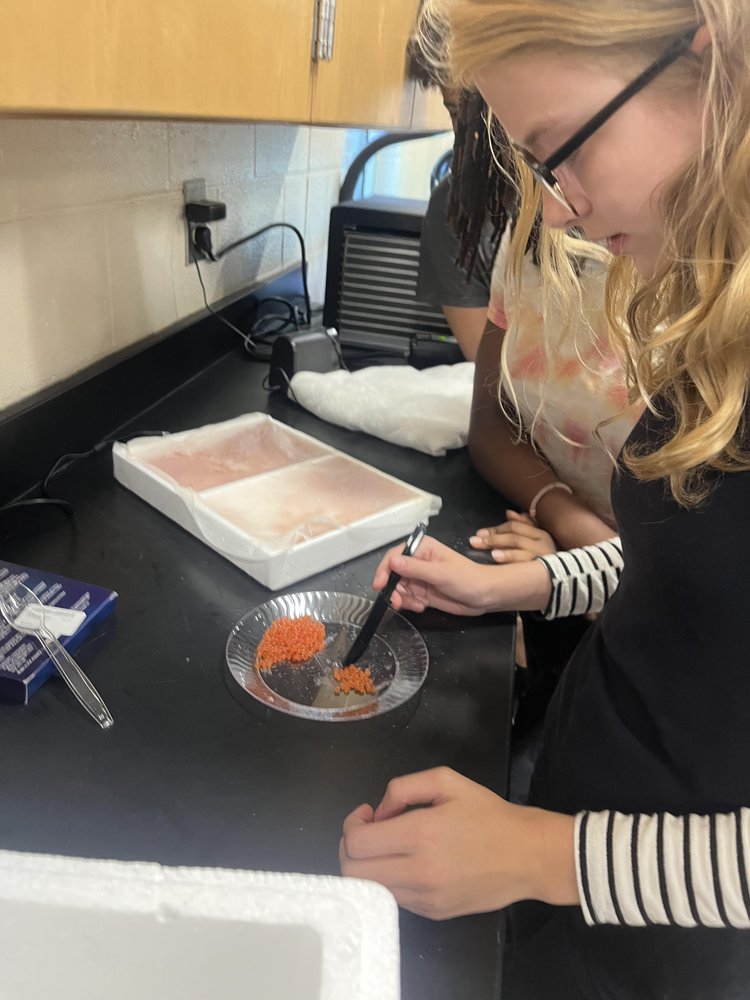
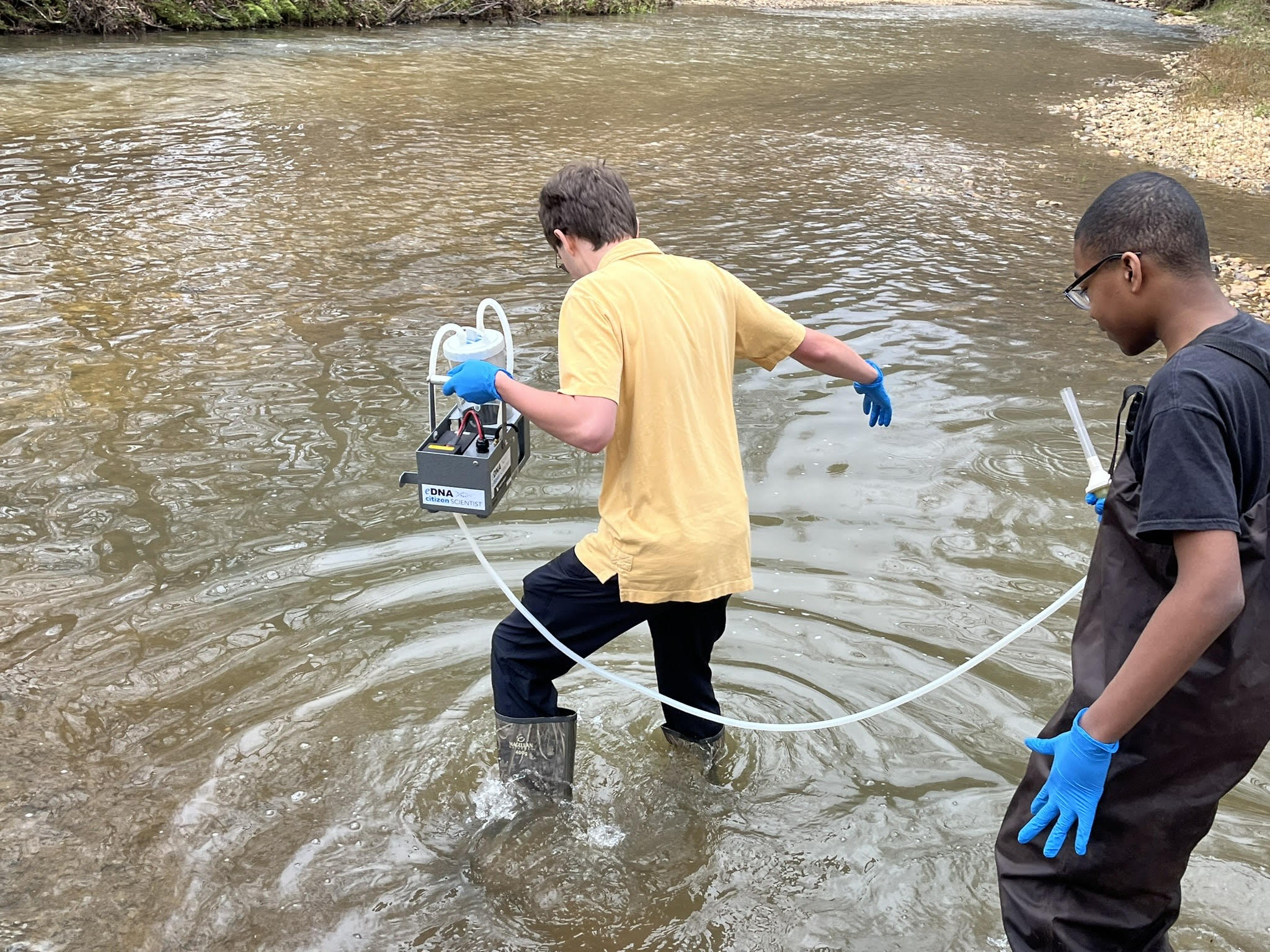
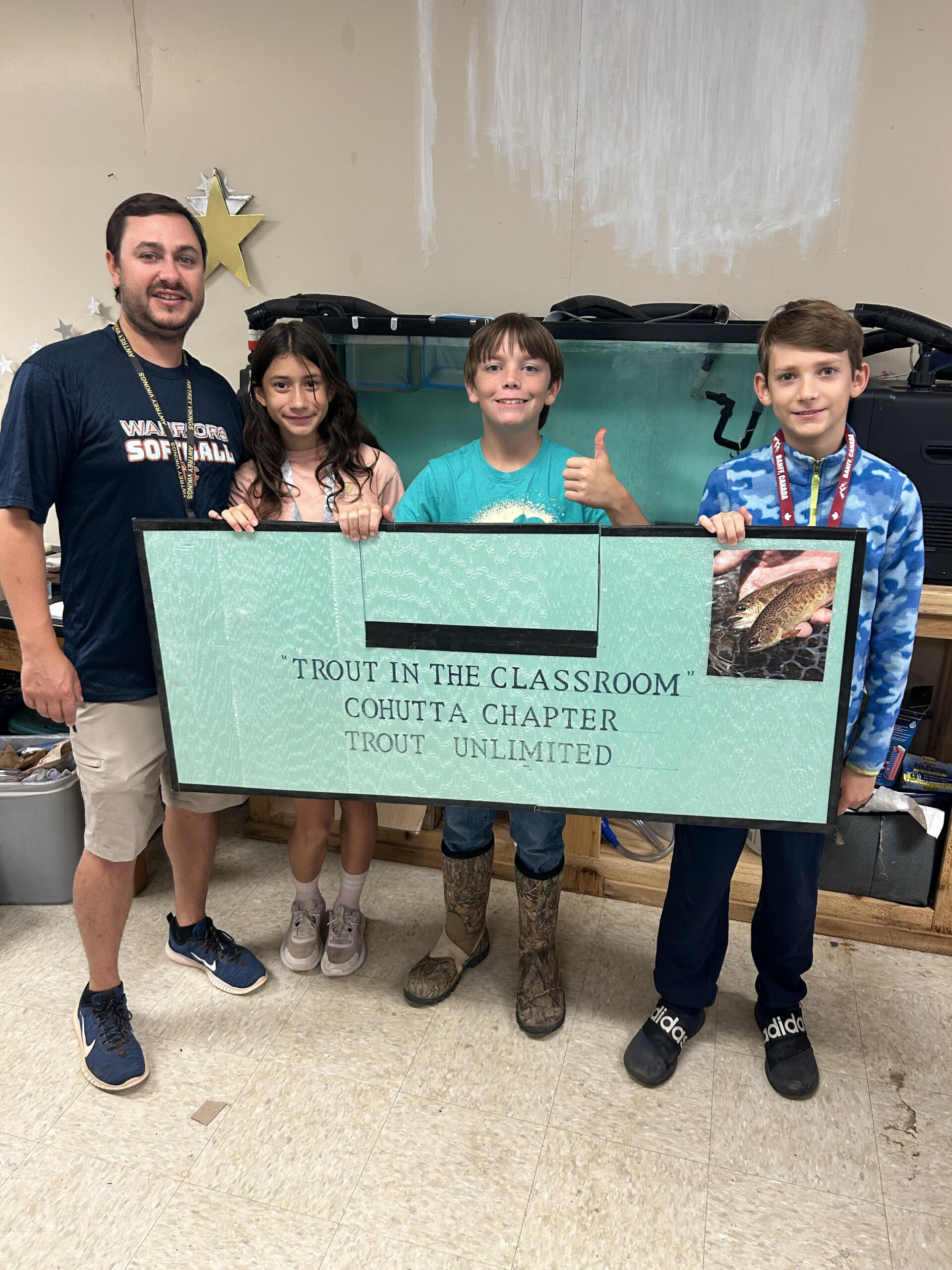
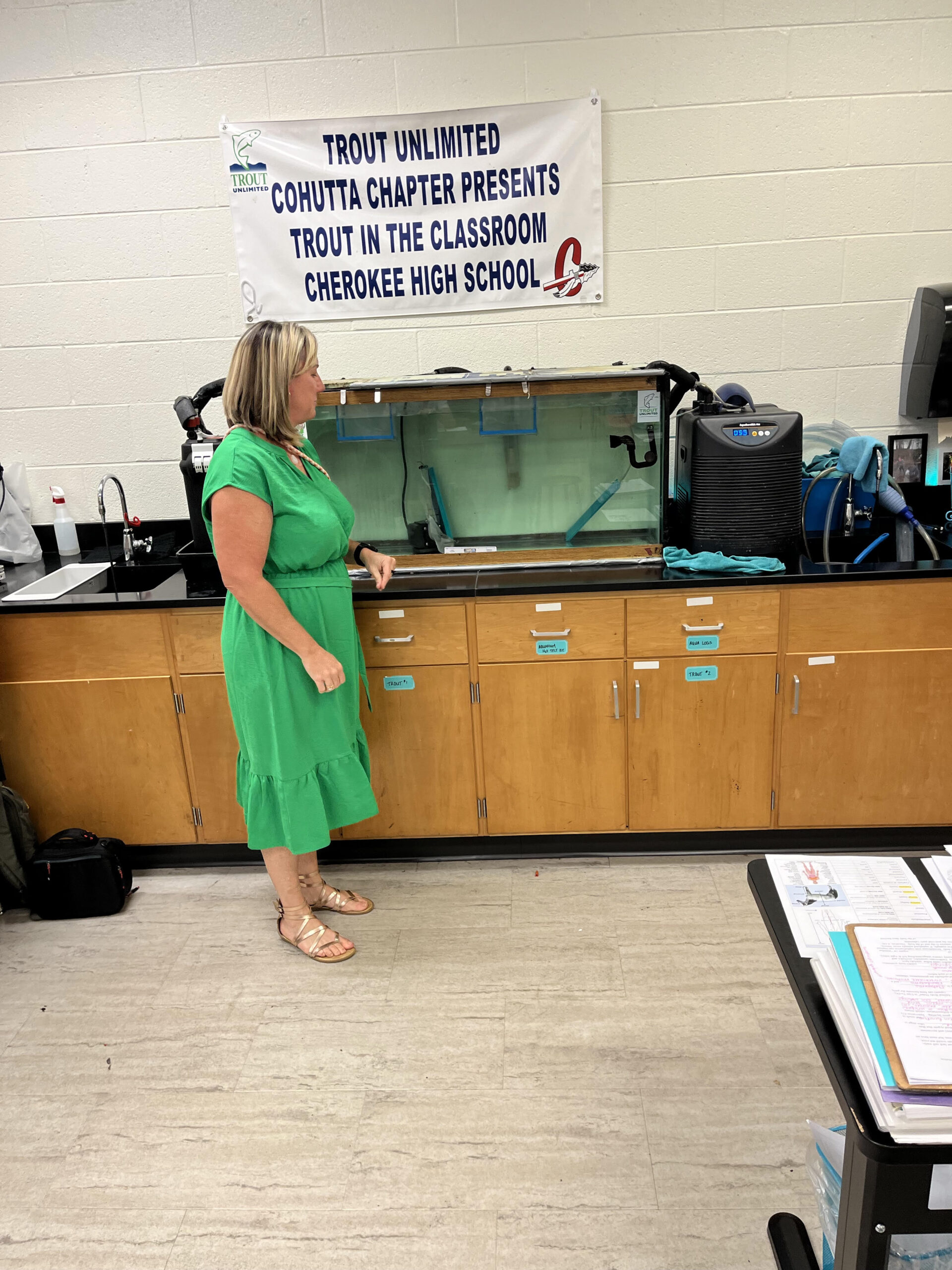
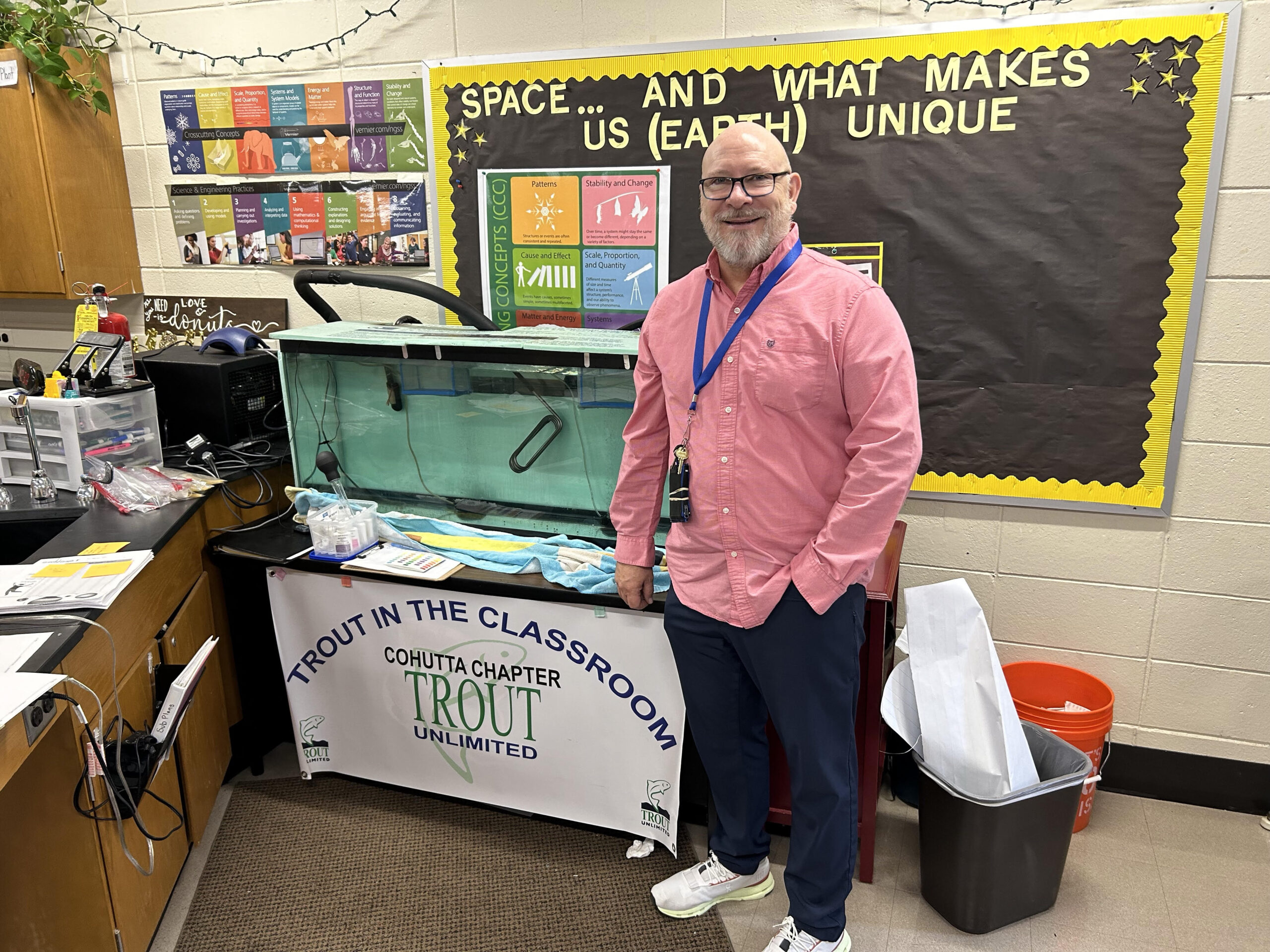
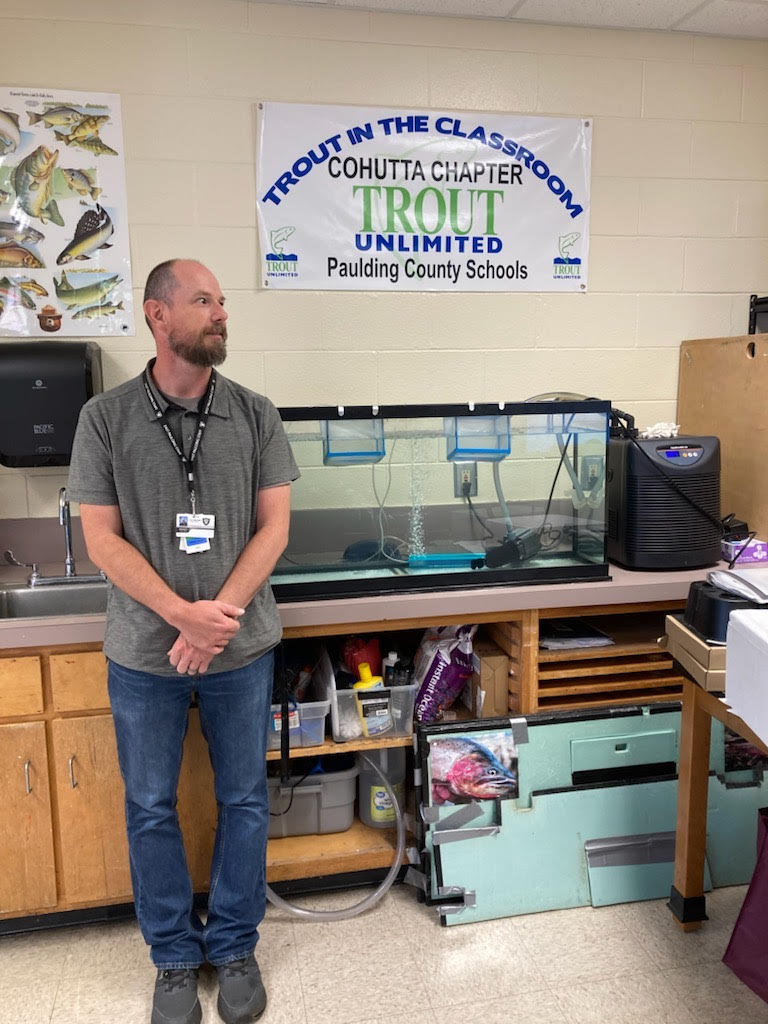
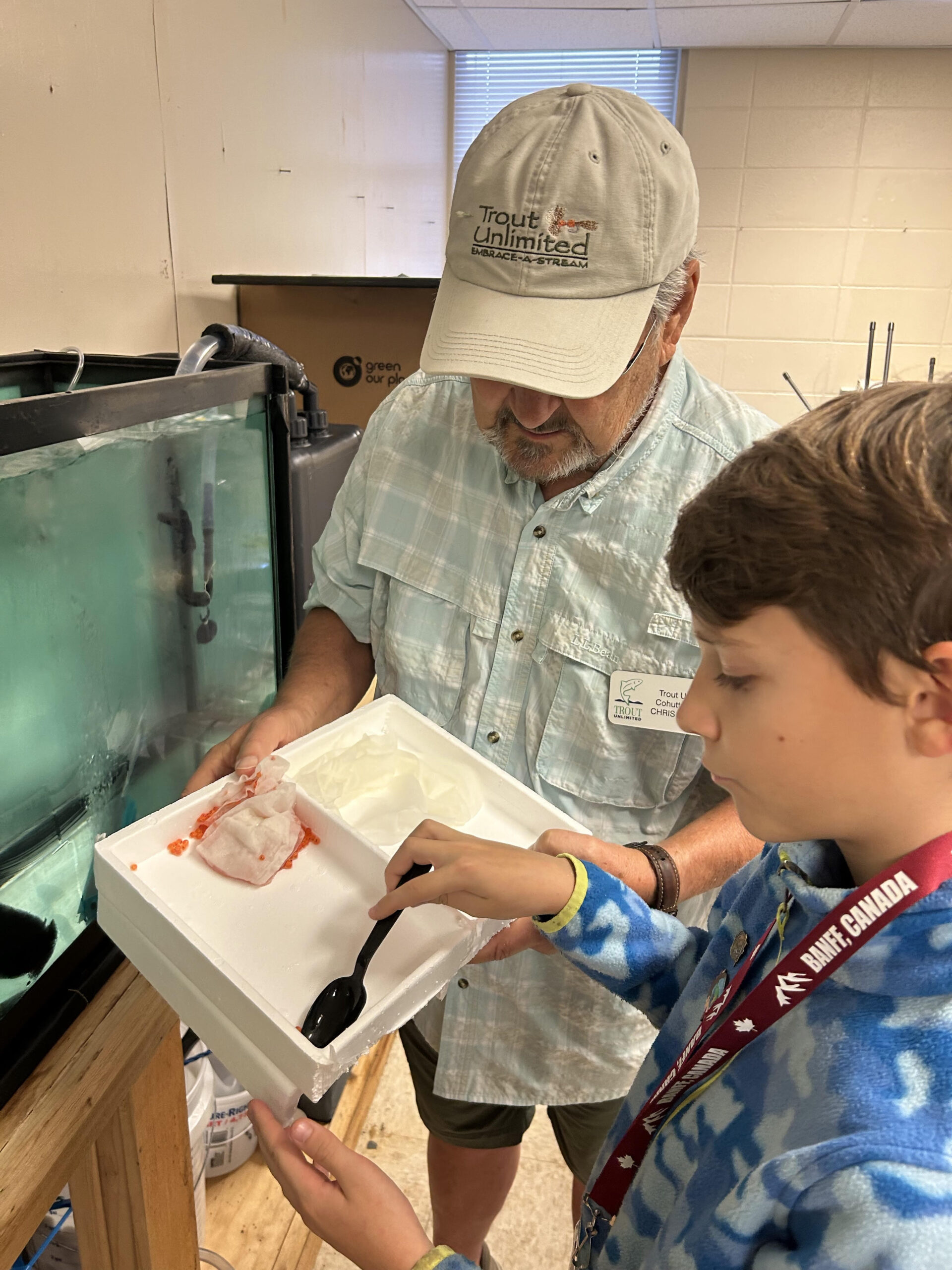
Trout in the Classroom is an environmental education program in which students grades K-12 raise trout from eggs to fry, monitor tank water quality, engage in stream habitat study, learn to appreciate water resources, begin to foster a conservation ethic and grow to understand ecosystems.
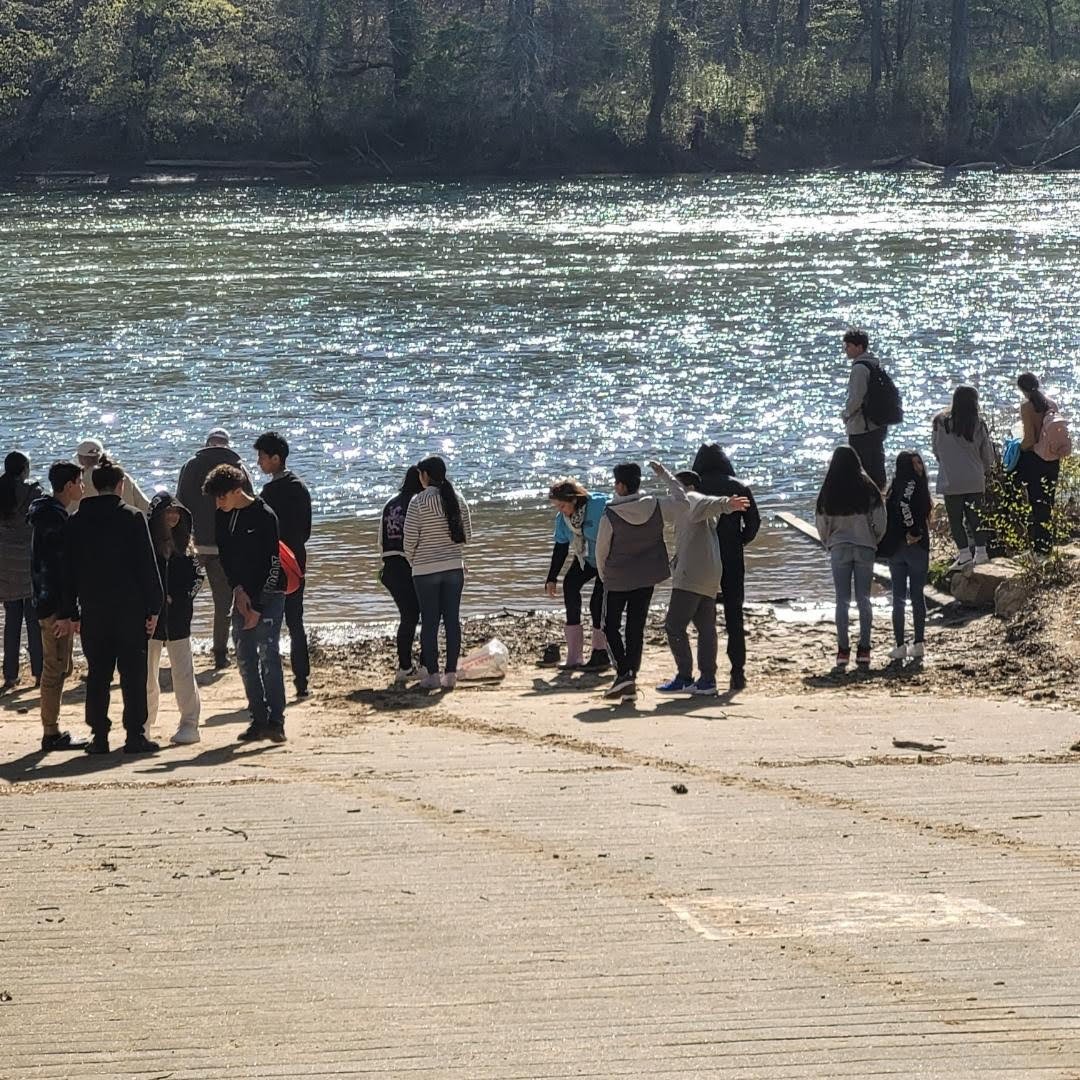
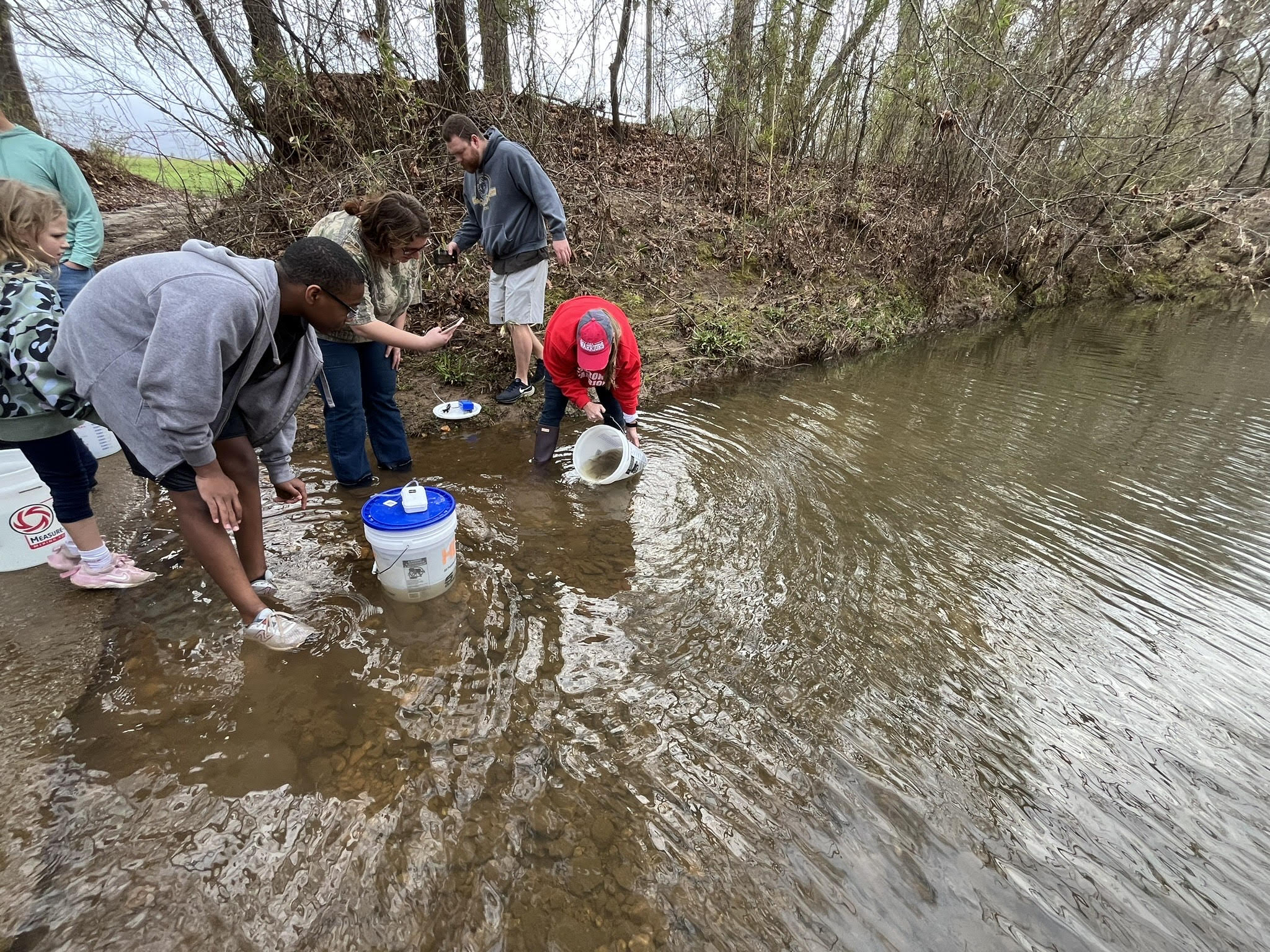
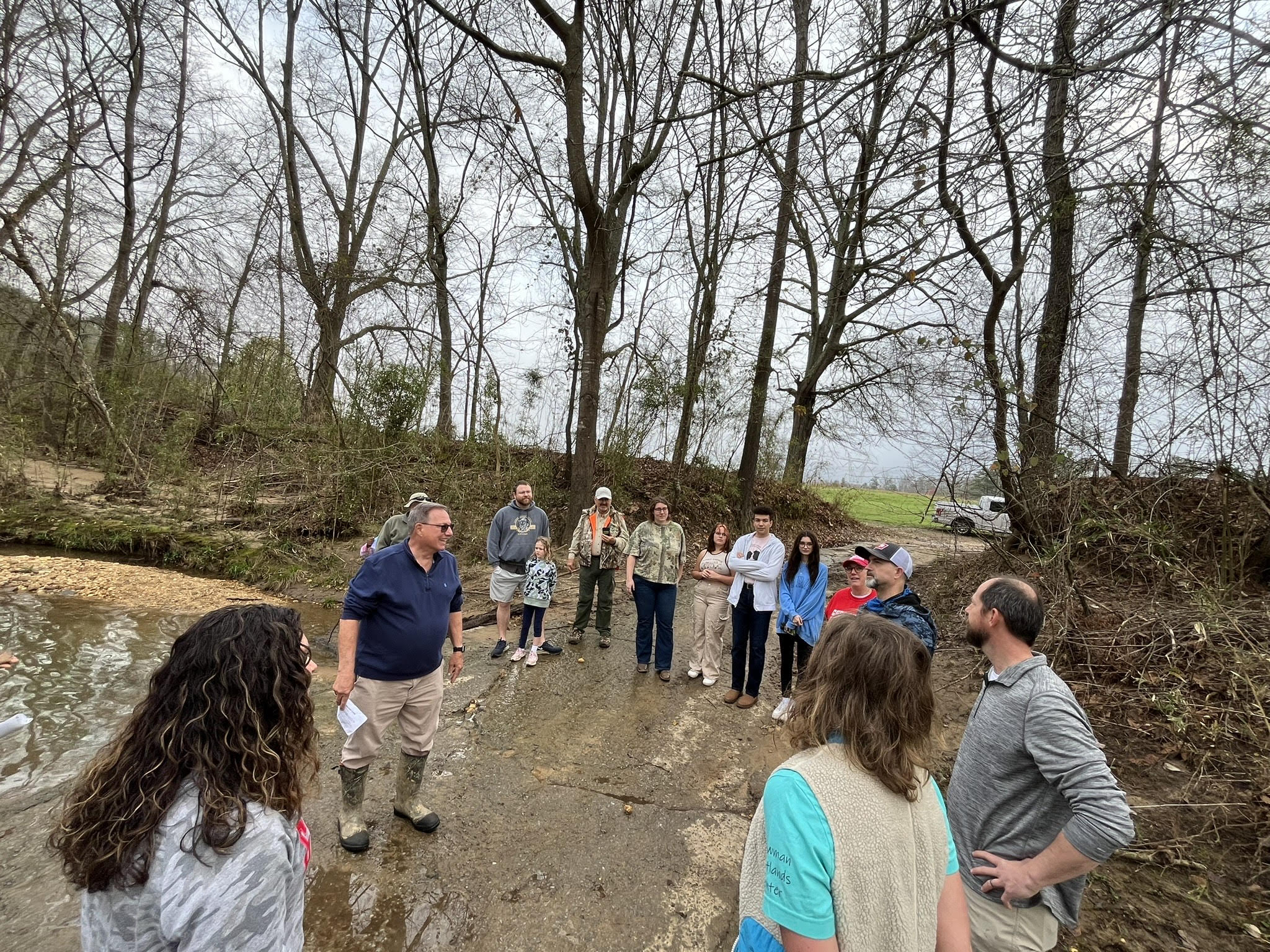
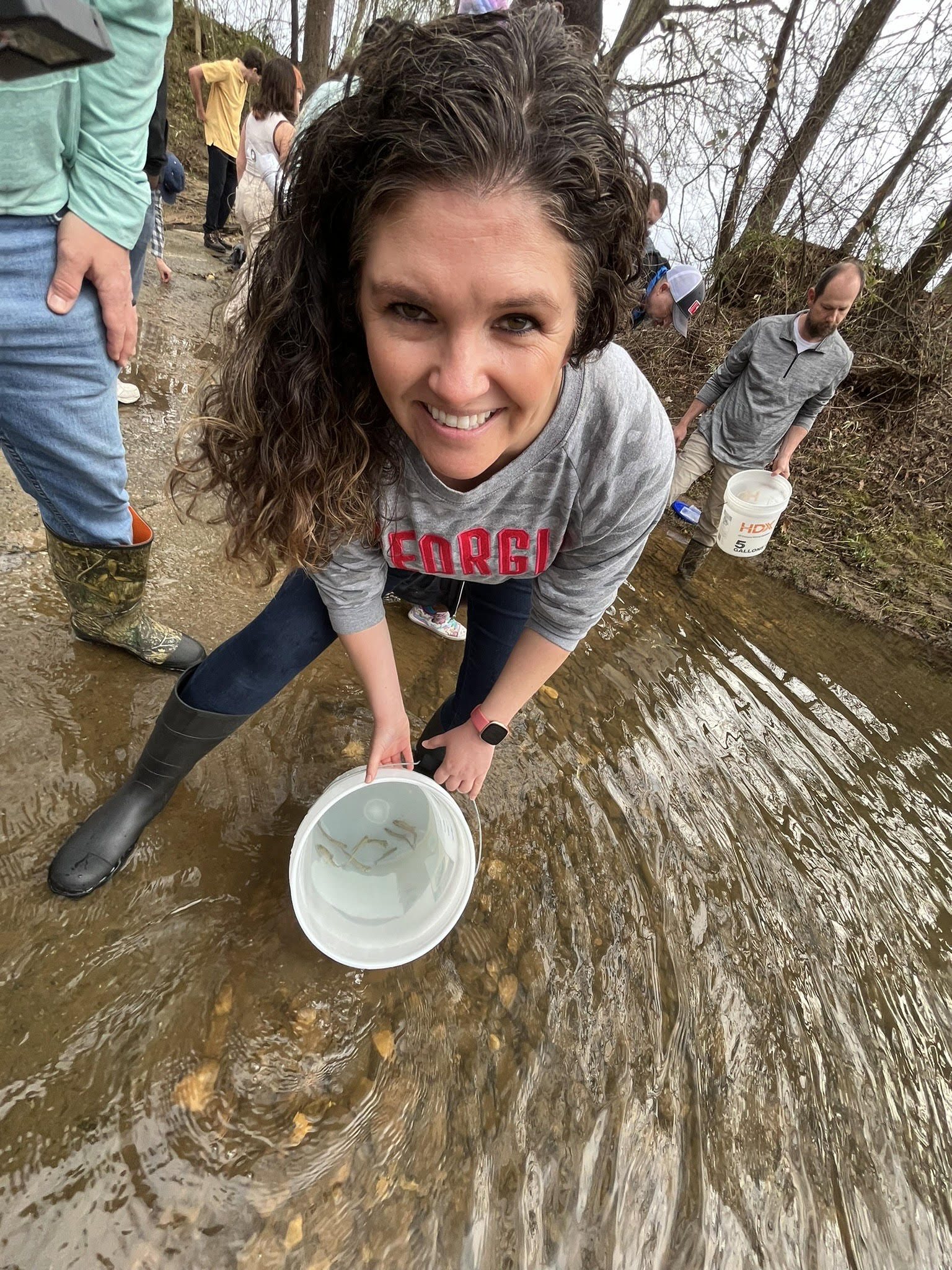
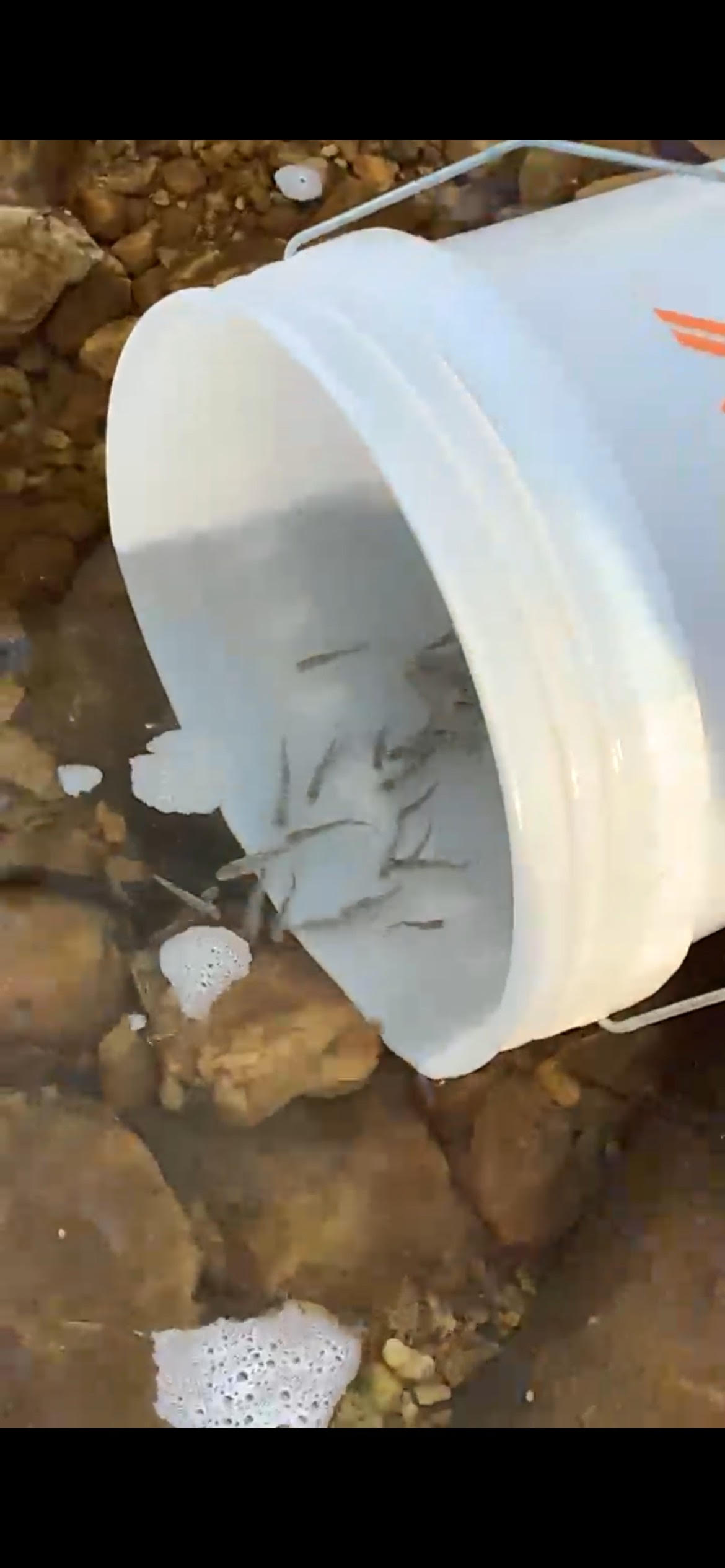
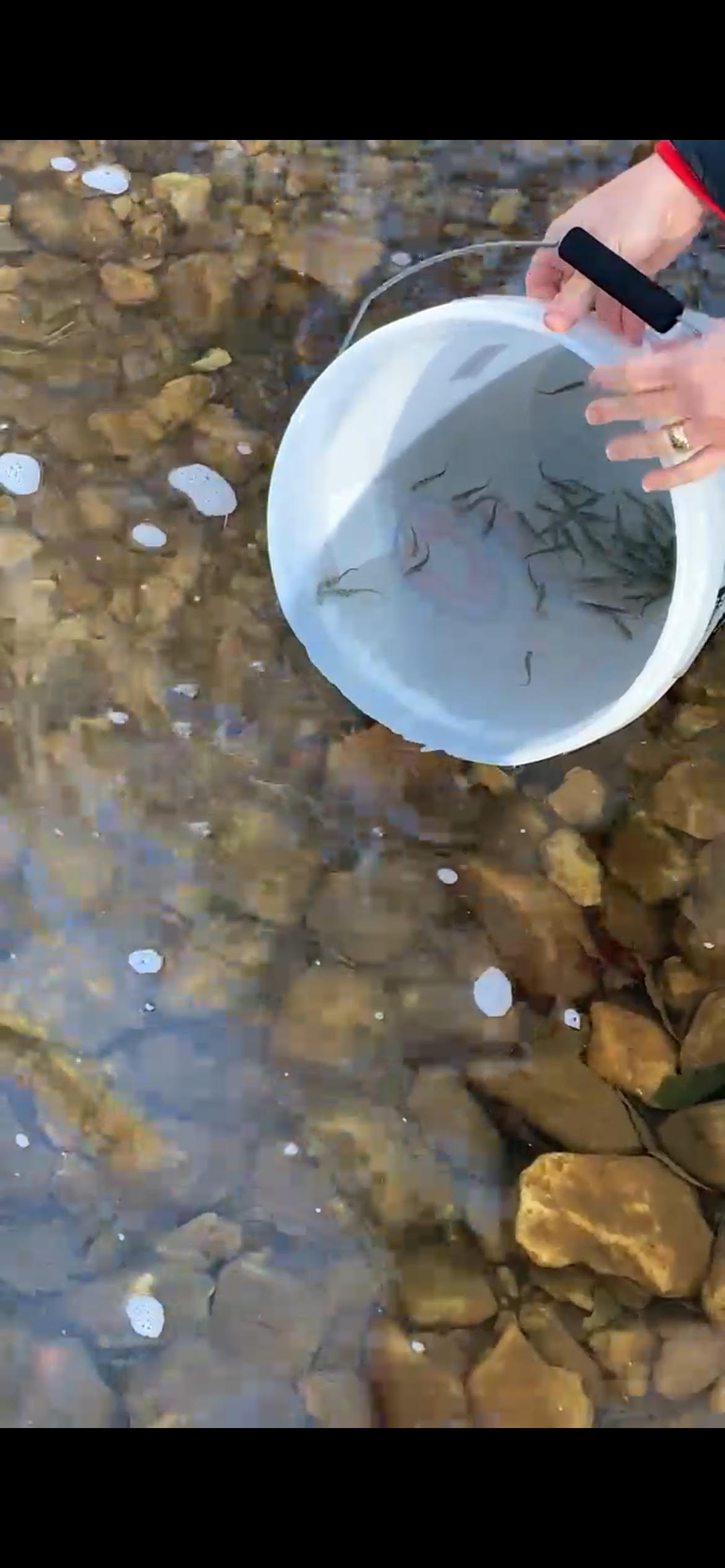
Most programs end the year by releasing their trout in a state-approved stream near the school or within a nearby watershed.
TIC has interdisciplinary applications in science, social studies, mathematics, language arts, fine arts and physical education.
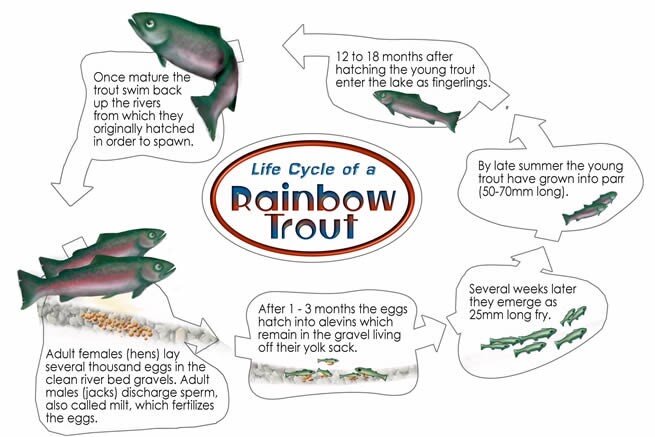
Development Stages of Trout
A. EMBRYO STAGE
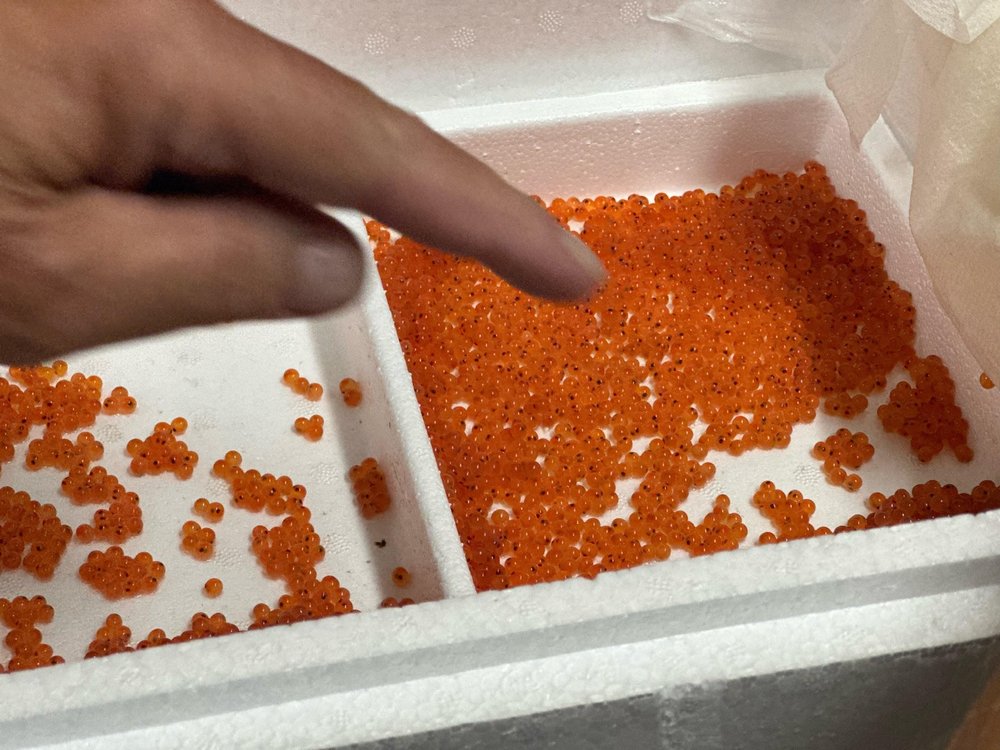
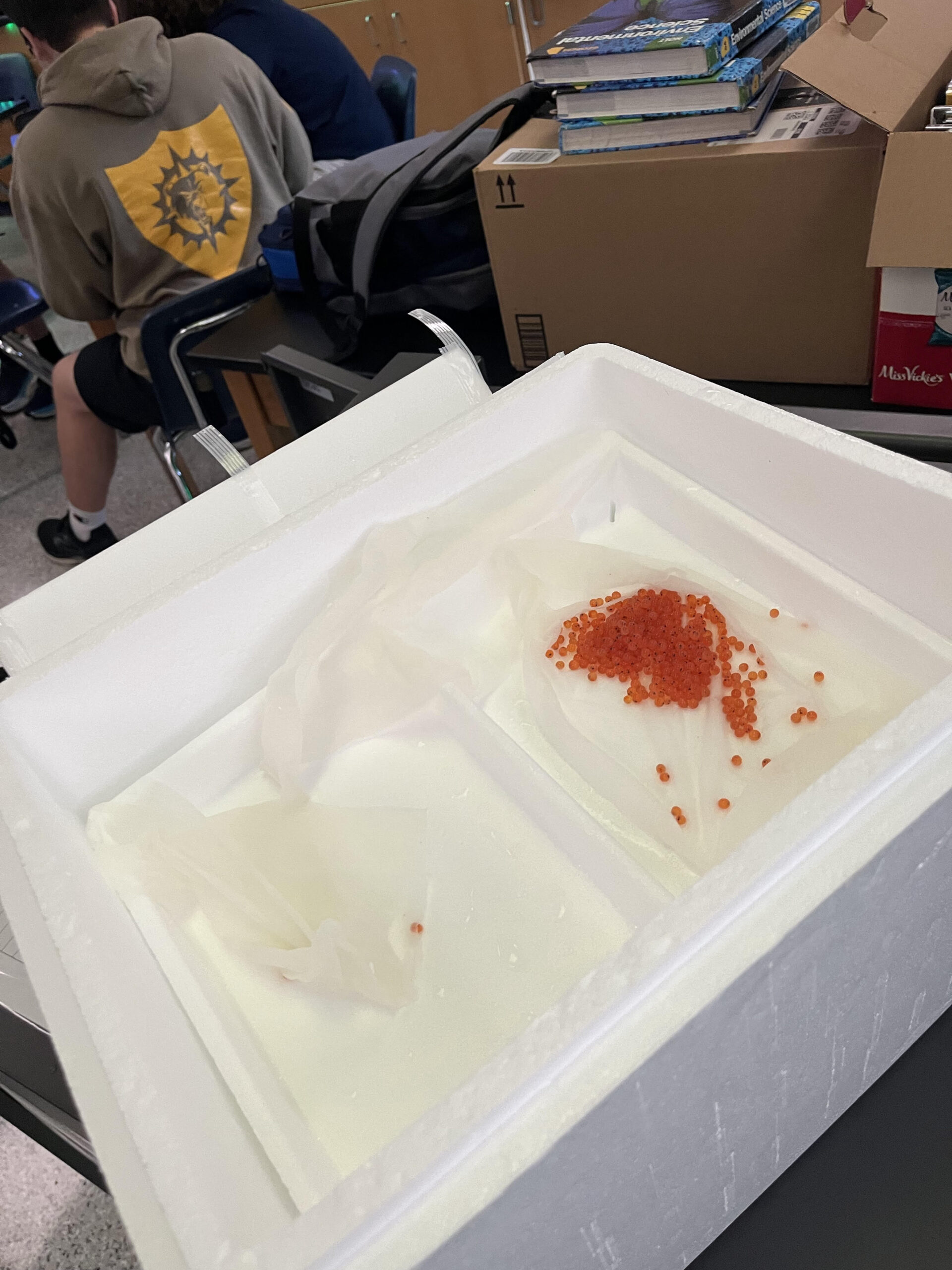
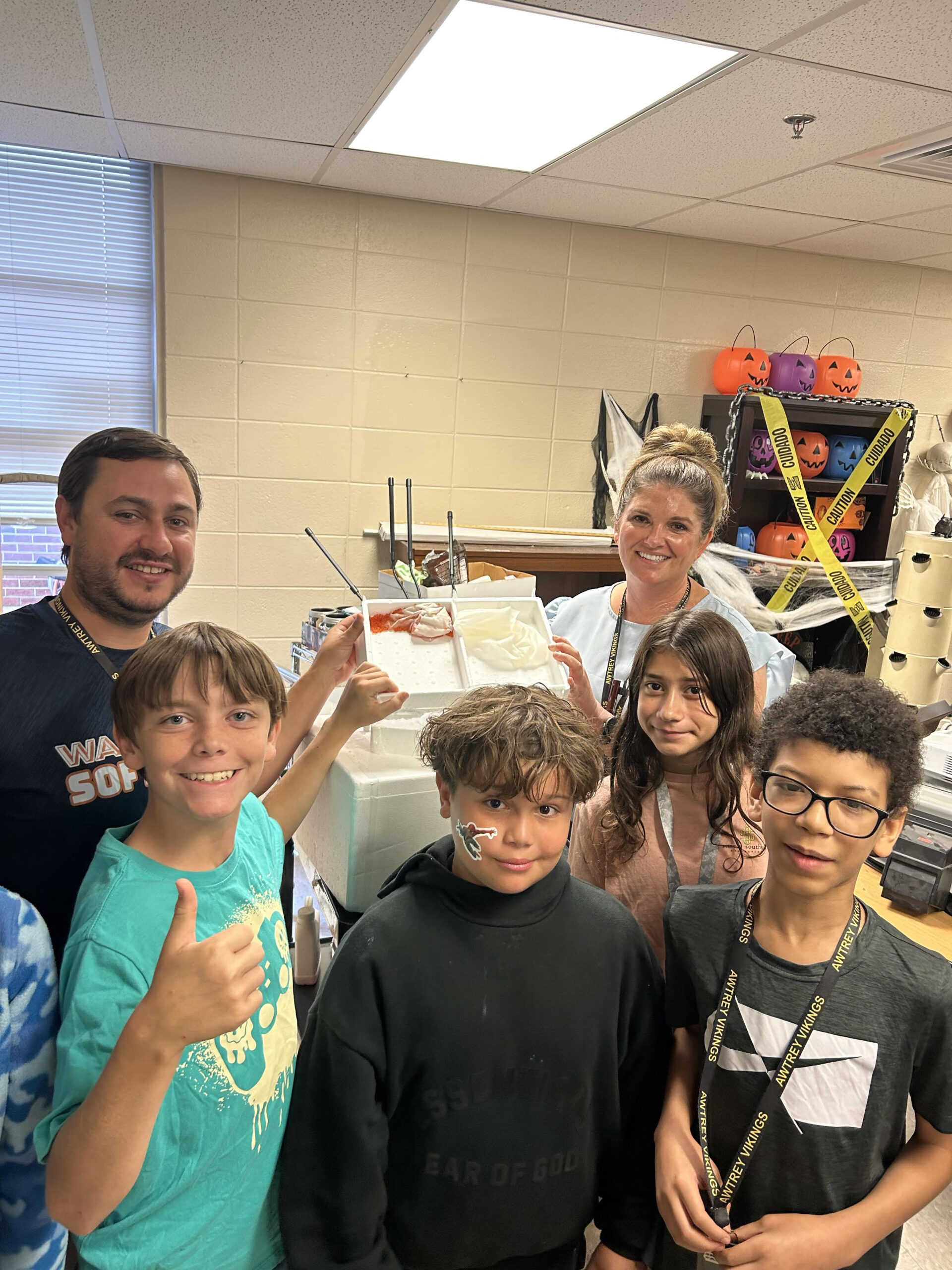
Fertilized trout eggs have black eyes and a central line that show healthy development. All the eggs will hatch over a 5-7 day period from the time the first one hatches. Hatching usually starts within a week of egg arrival.
B. ALEVIN STAGE (from hatching to 4-8 weeks, depending on water temperature)
When the embryos hatch, they have large yolk sacs that serve as their food source.
C. SWIM-UP STAGE 4-6 weeks)
Initially, alevin will “swim up” to inflate their air bladders—independent of the need for food. It is important to delay first-feed until the majority of fish have only a small slit of yolk visible. Research indicates that fish still have considerable yolk reserves when only a slit is present.
D. FRY STAGE (6-8 weeks)
Some trout never learn to feed and will die. These non-feeding fish are called “pinheads” (big heads, skinny bodies). These trout should be removed. They will not develop. Most TIC classrooms see a mortality spike due to pinheads. It is quite normal.
E. PARR STAGE (the rest of the time until release)
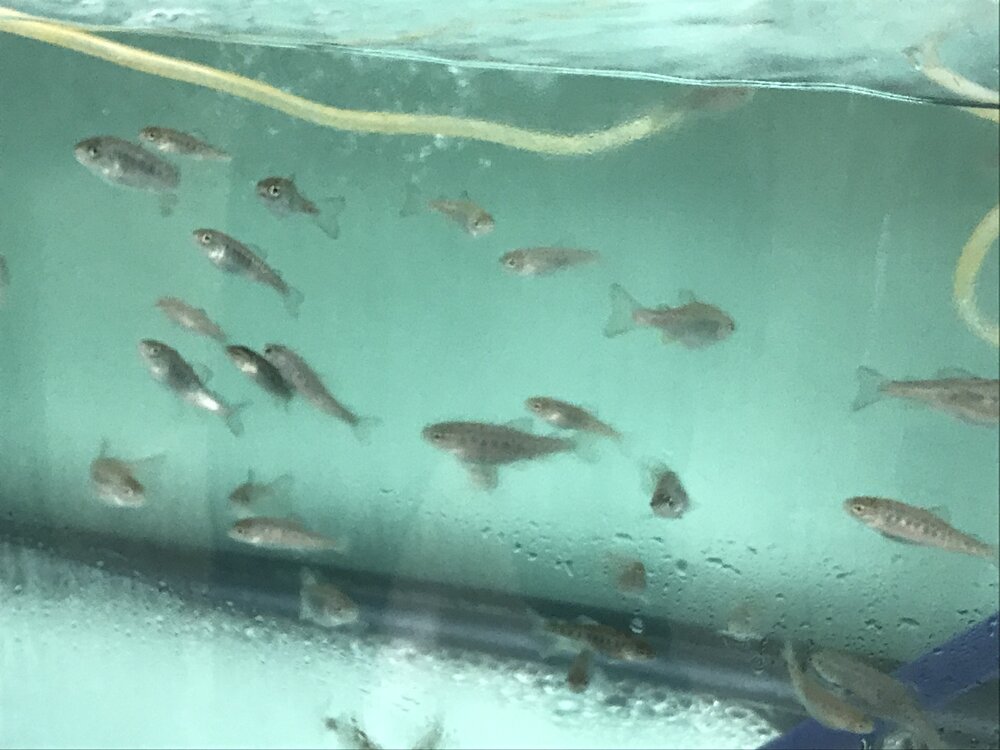
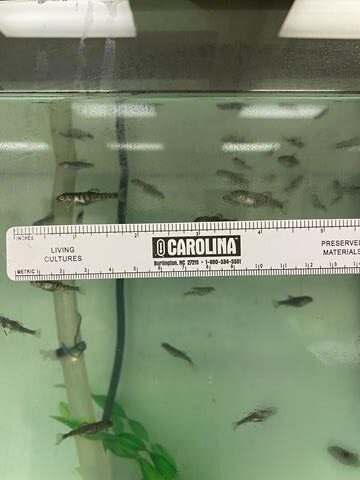
When a fry grows to 2 inches it becomes a fingerling. Larger fingerlings will develop dark vertical stripes known as parr marks that serve as camouflage. At this stage they are called parr.
Cobb Co. Schools
Cherokee Co. Schools
Paulding Co. Schools